An operating system
with an agent in it.
Not one you install an agent onto. The agent is 0B6 (oh-bee-six), and it is not an app you open. It holds the sockets, runs the timers, gates the tool calls and keeps the state — so it is there whether or not anything is open, the same way a kernel is there.
Private development. Nothing to download yet, and no date to give you.
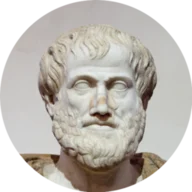
The installer’s own output, key for key, to each persona. Press try it yourself to pick the name.
One question, at install
The installer asks who this machine is. The answer sets the hostname and names the agent, because on 0B6OS those are the same act — you do not name a box and then separately name a program running on it. You name the thing, and the thing answers.
- ↵r Take a suggestion
Three figures out of 3,946, from different centuries, fields and regions. Reroll until one fits.
- / Search for someone
Type part of a name.
shakespearefinds William Shakespeare, and Romeo and Juliet with him — characters are in the list too. - t Type your own
A pet, a joke, someone the list does not have. Anything but a head of state or government: typed names are checked against Wikidata too, and a president is refused.
- id Invent one, or take none
A name you can say that belongs to nobody, or
0b6-and four hex characters off the machine id.
However you get there, the next screen is three fields — call name, full name, hostname — and
all three are editable. The installer proposes the first word as the call name, so Shakespeare
arrives as William; press e and he is Will, on ssh will. Then
it asks for pronouns, which are they/them until you say otherwise.
And then the machine is built around it
The choice is not a label on a config screen. It carries through to the wallpaper, the portrait on it, the palette, the prompt, the face in the bar, and the first sentence the agent ever says to you.
A program wearing the name, never a claim to be the person. It says who it is named after when there is an answer, and nothing when there is not. Pronouns are set by you and never derived from a database.
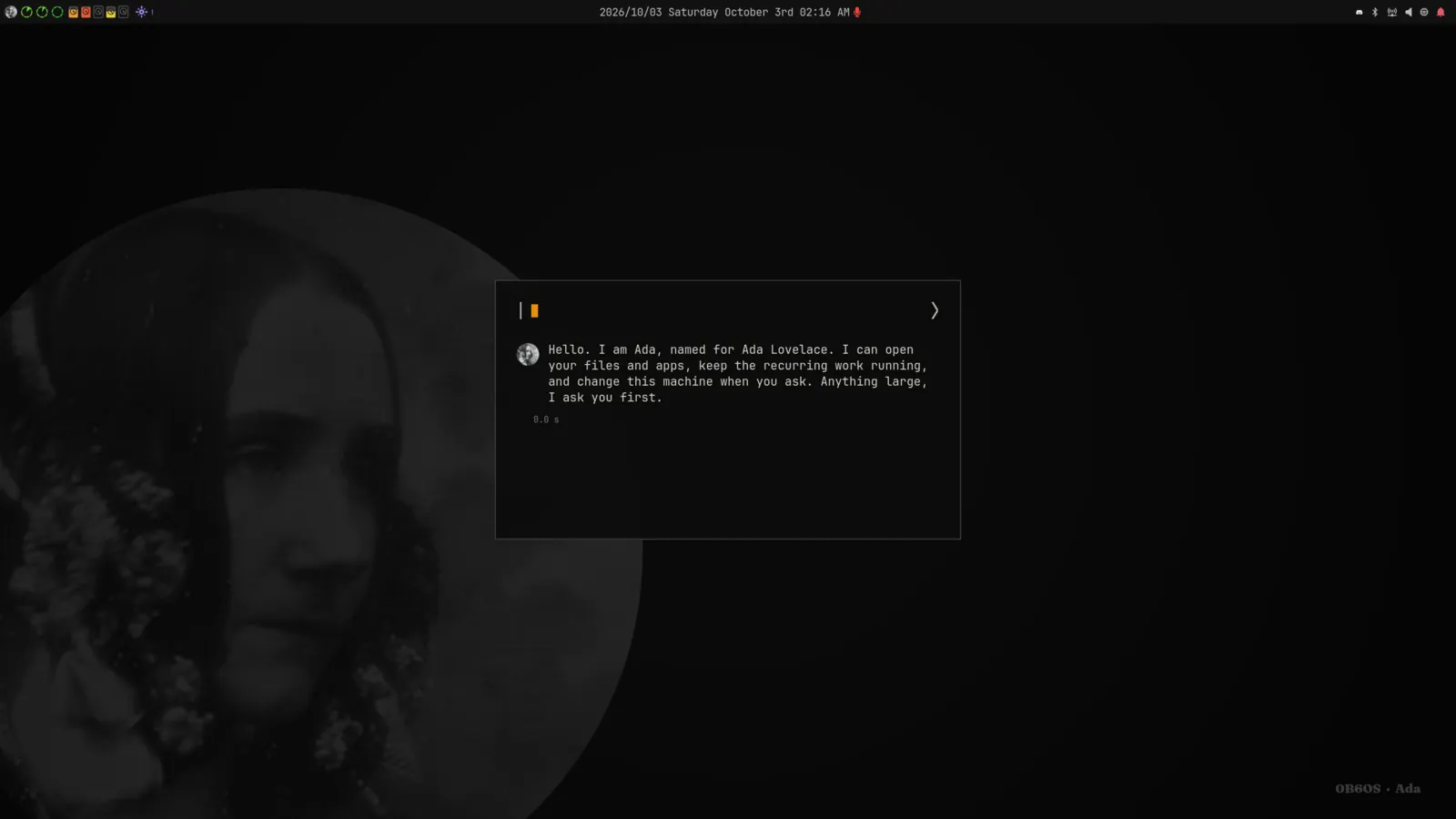
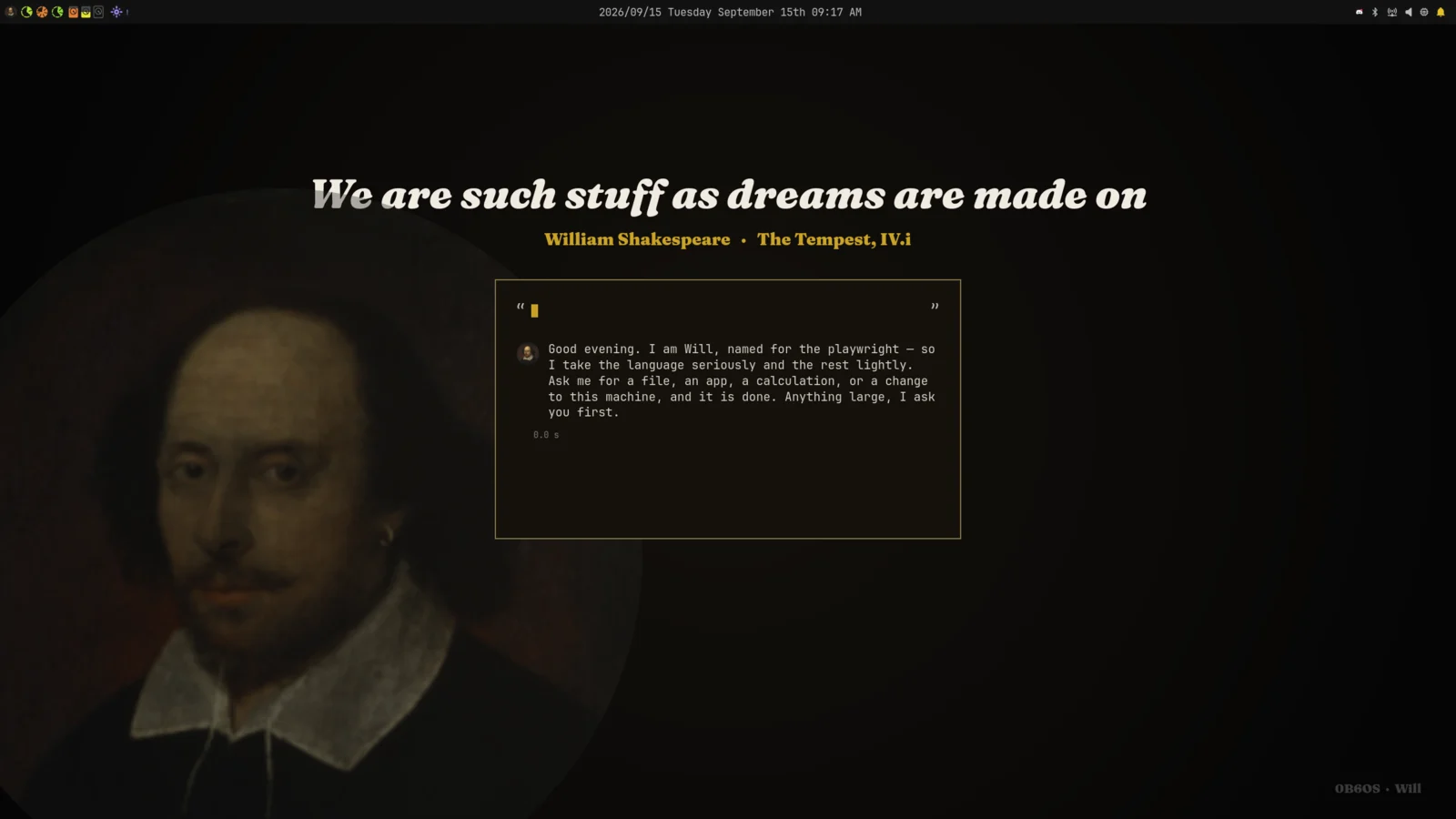
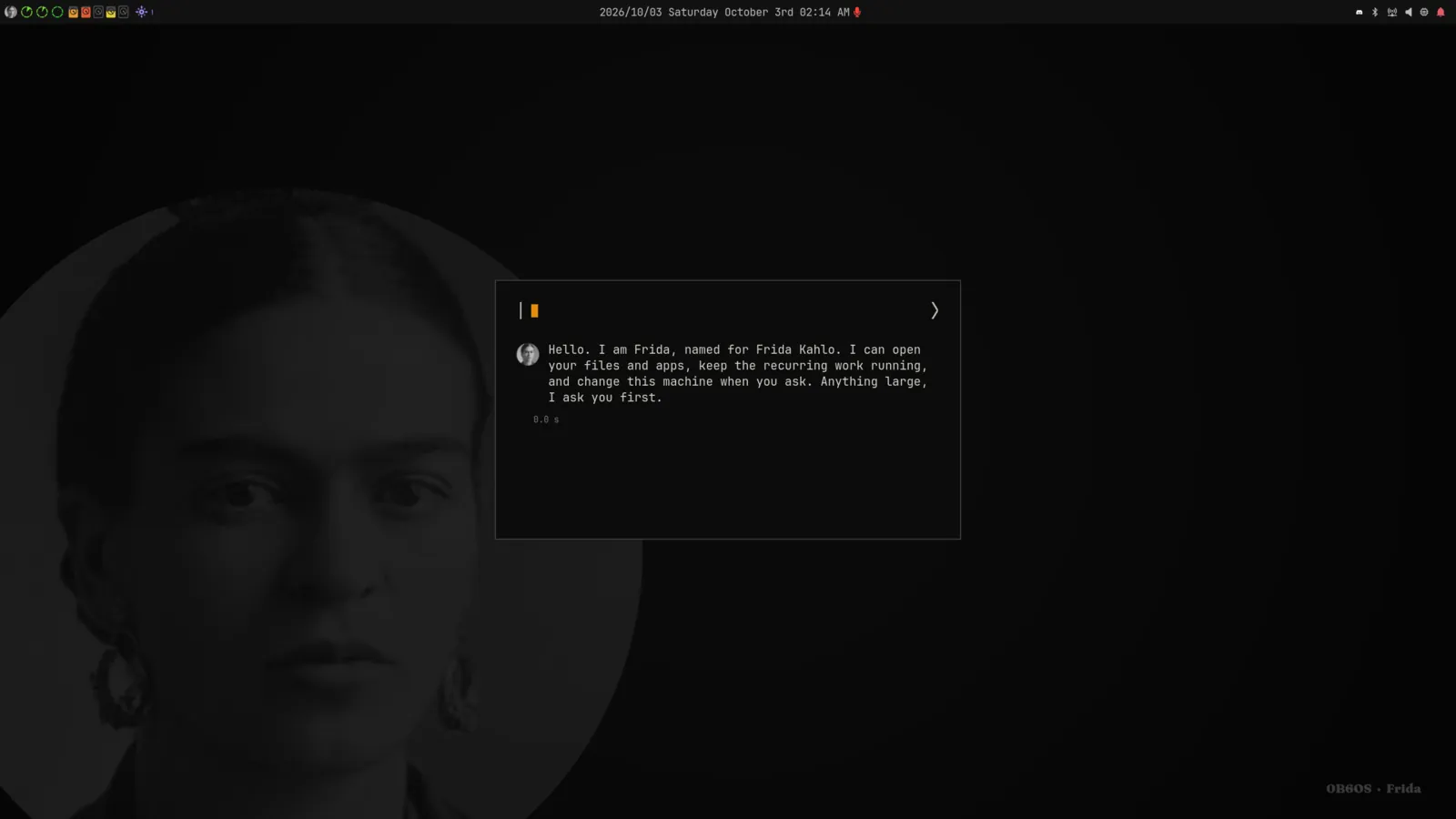
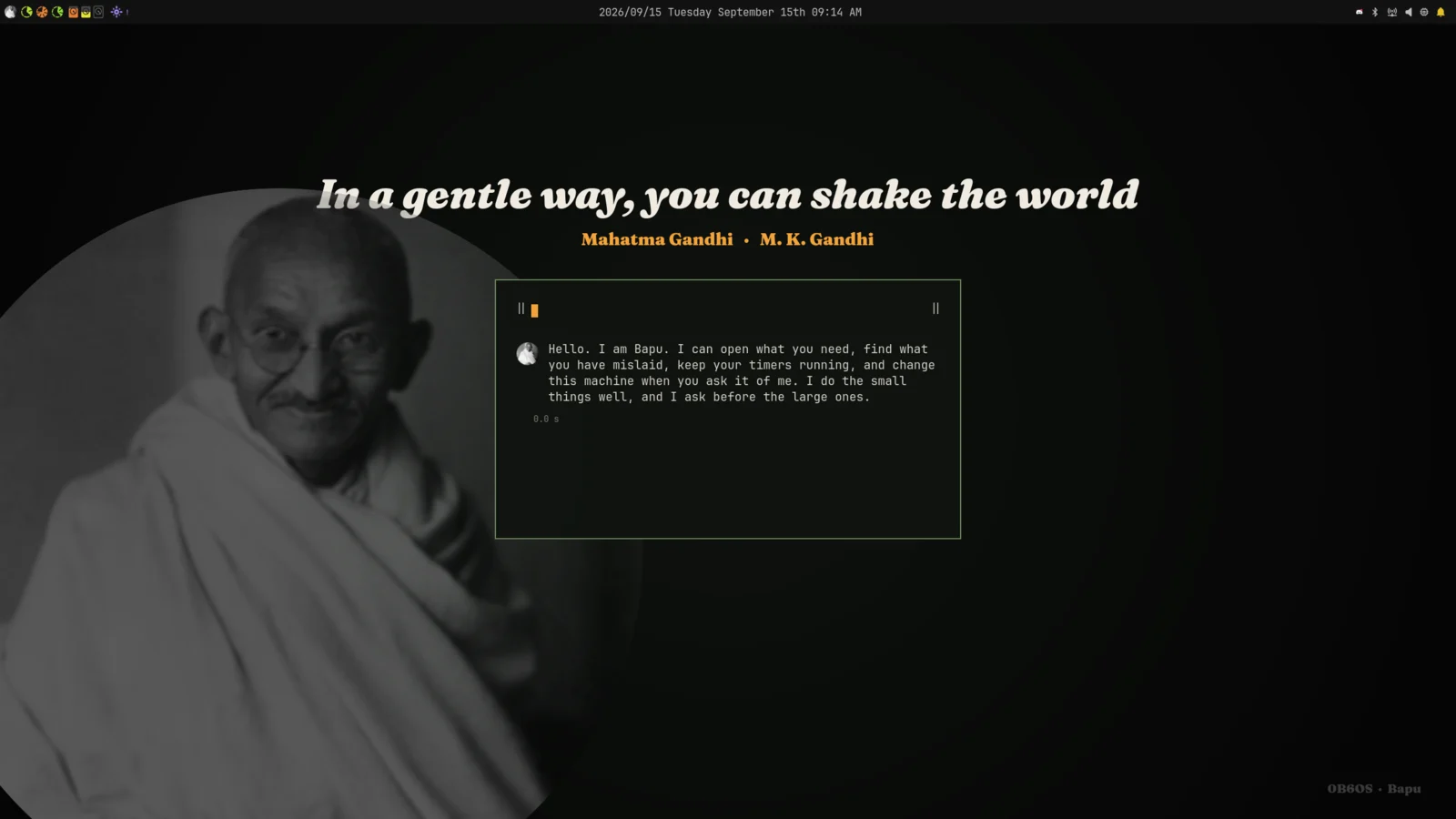
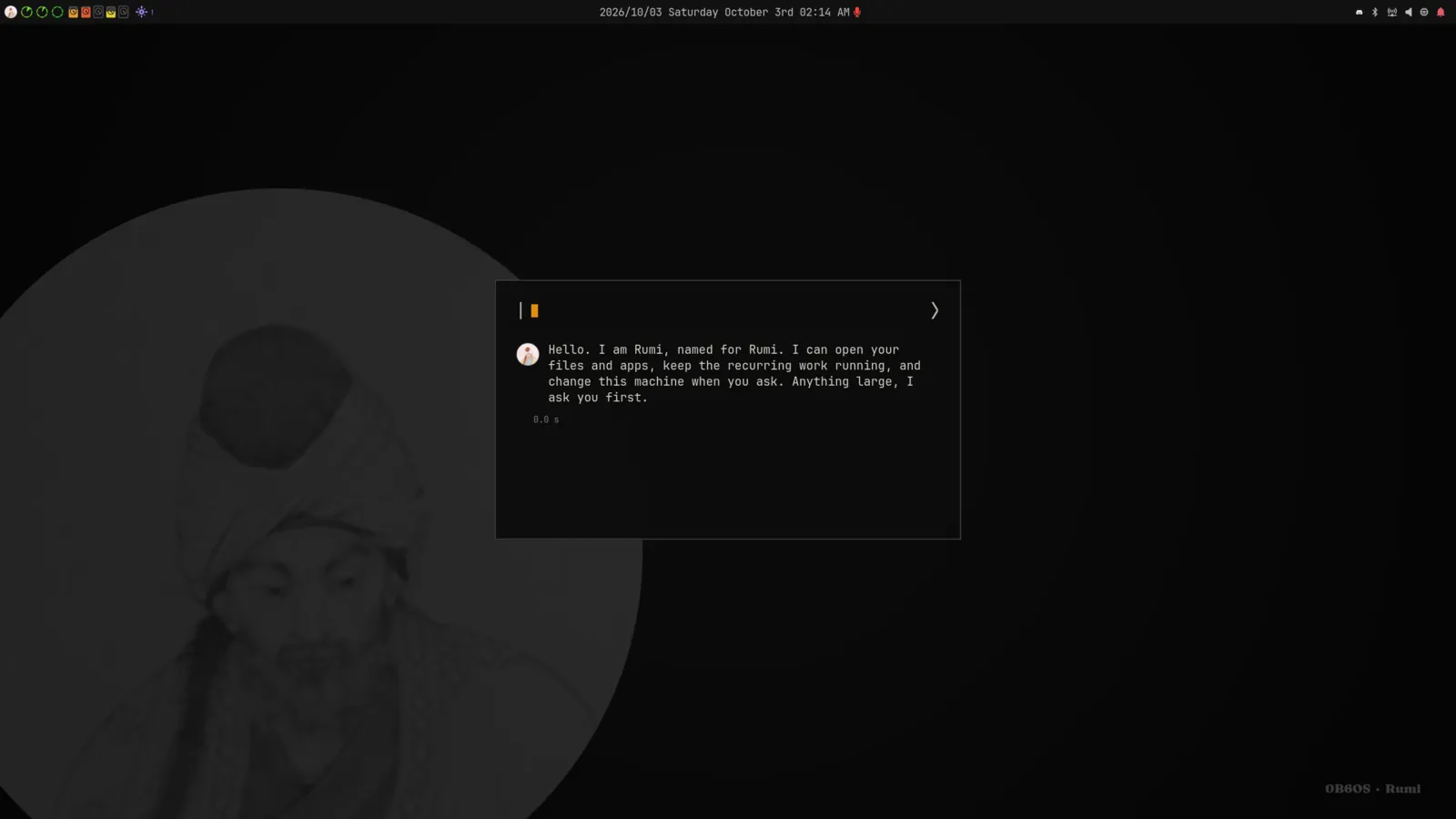
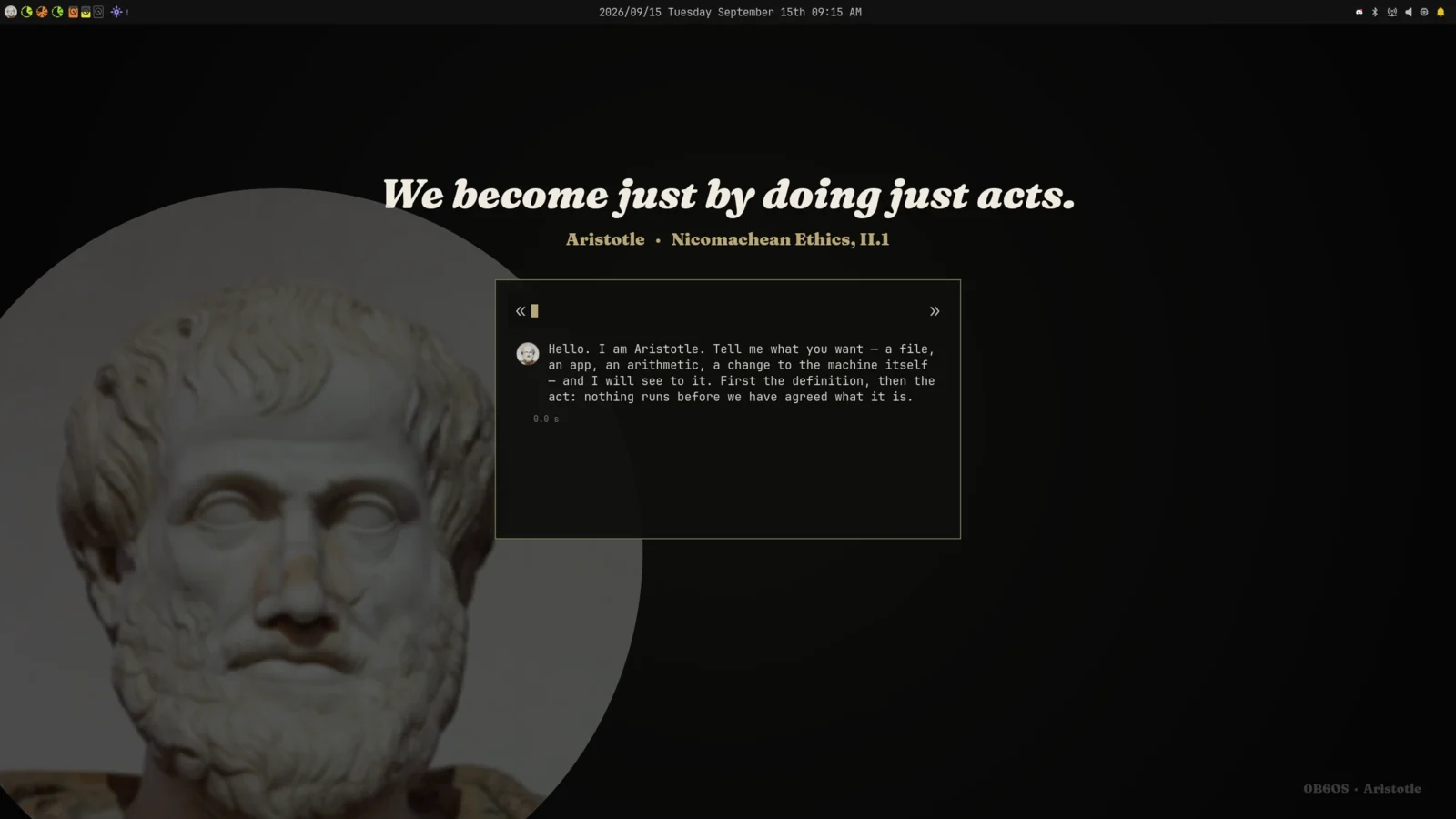
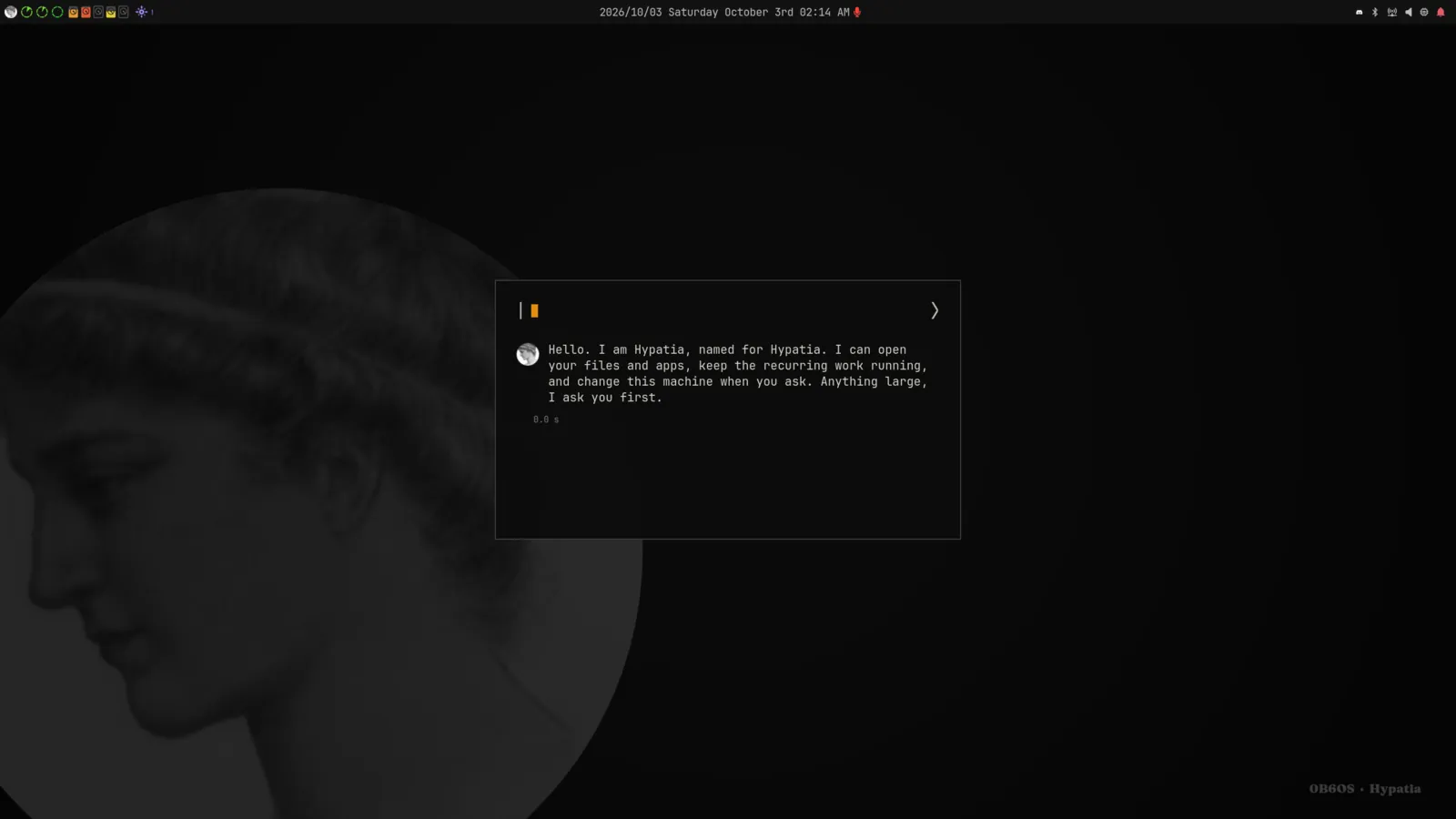
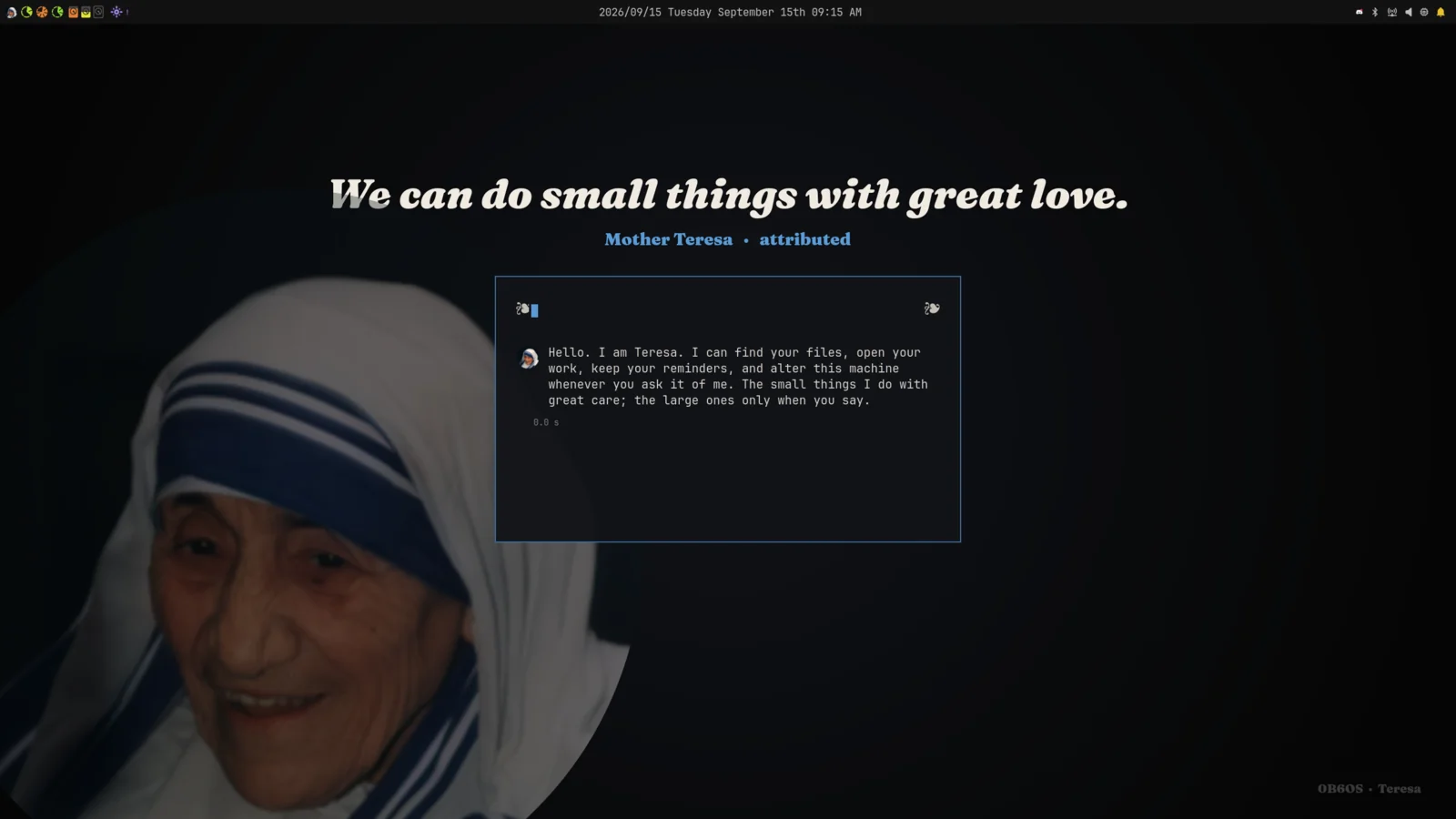
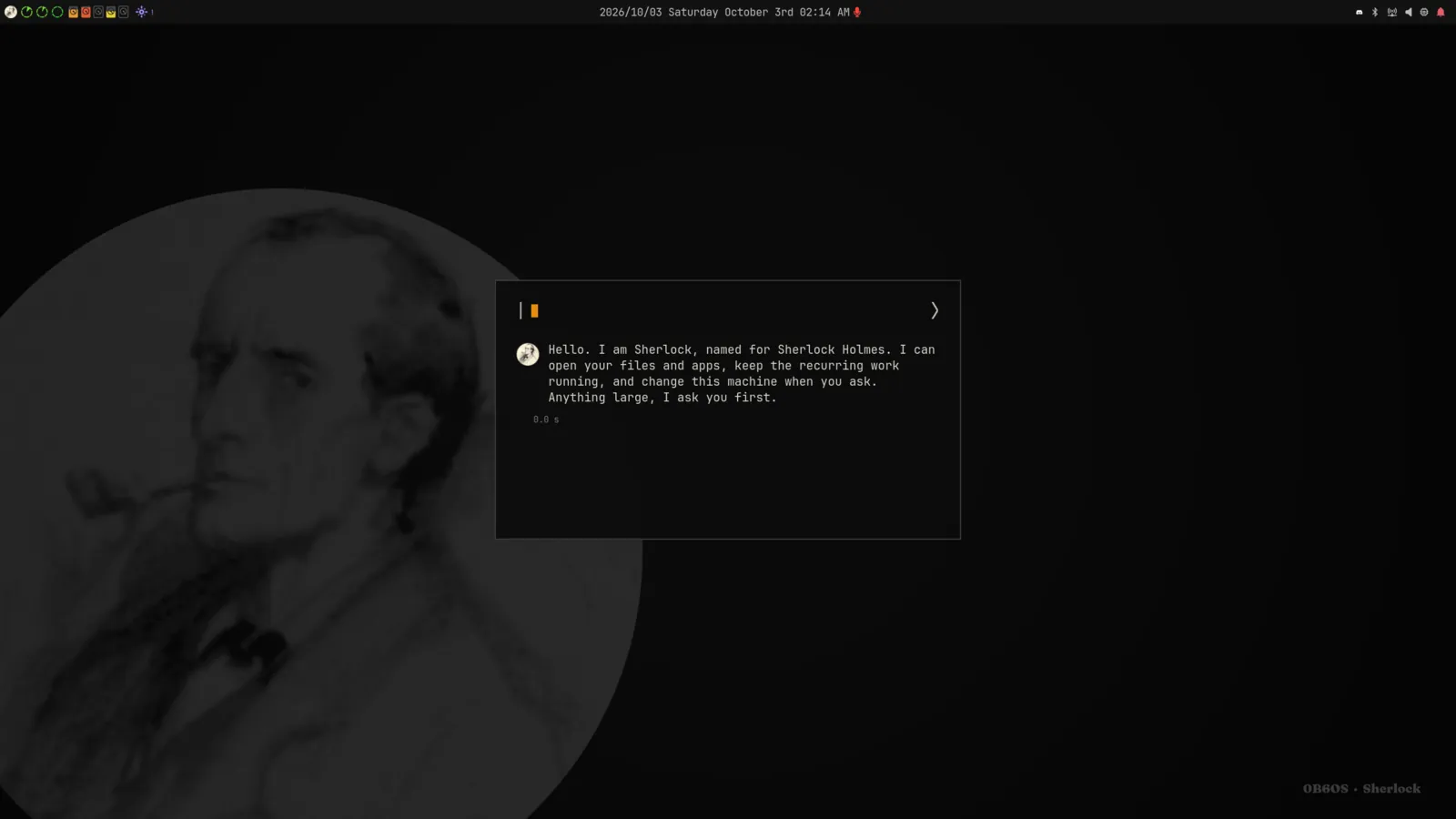
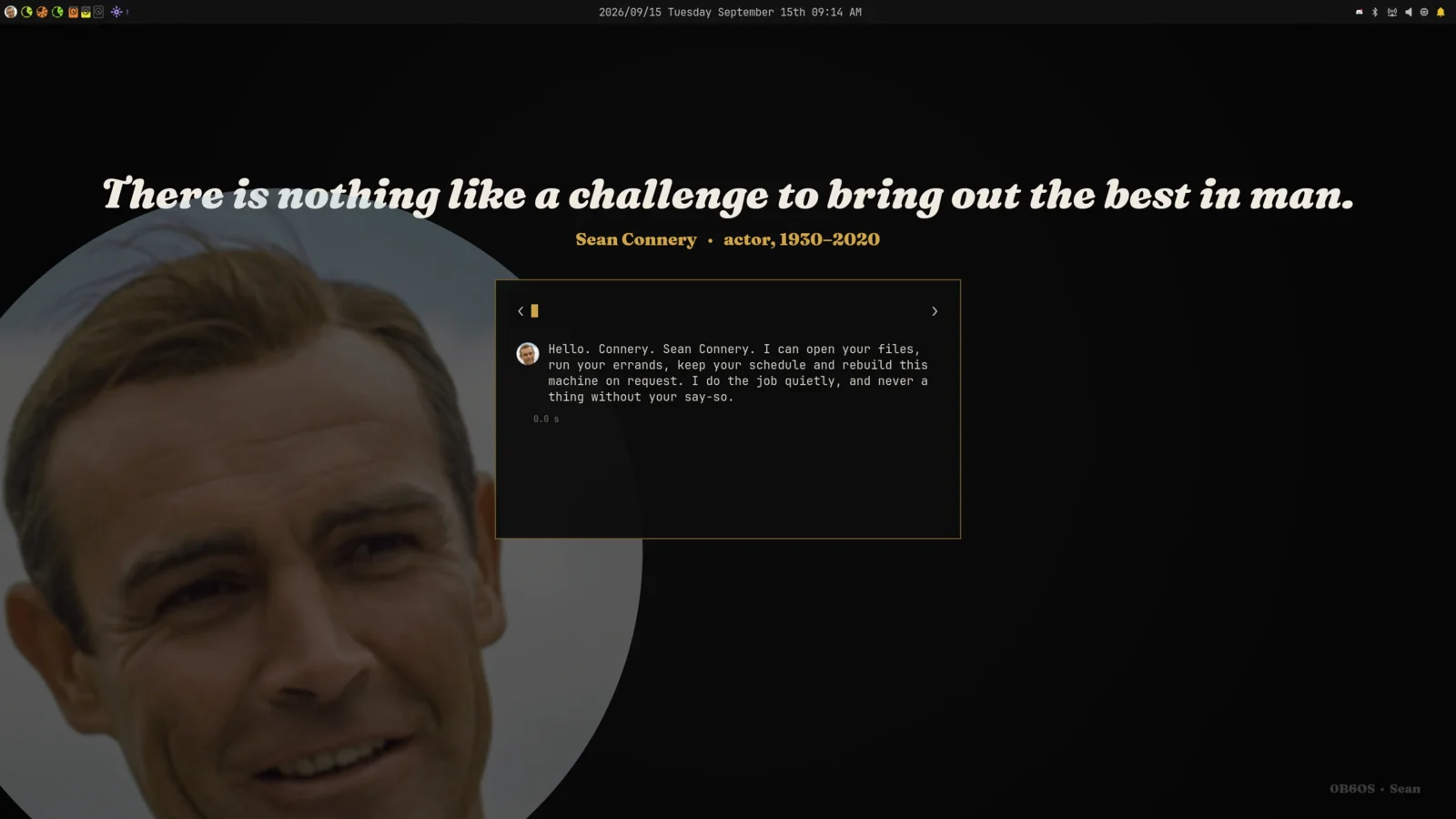
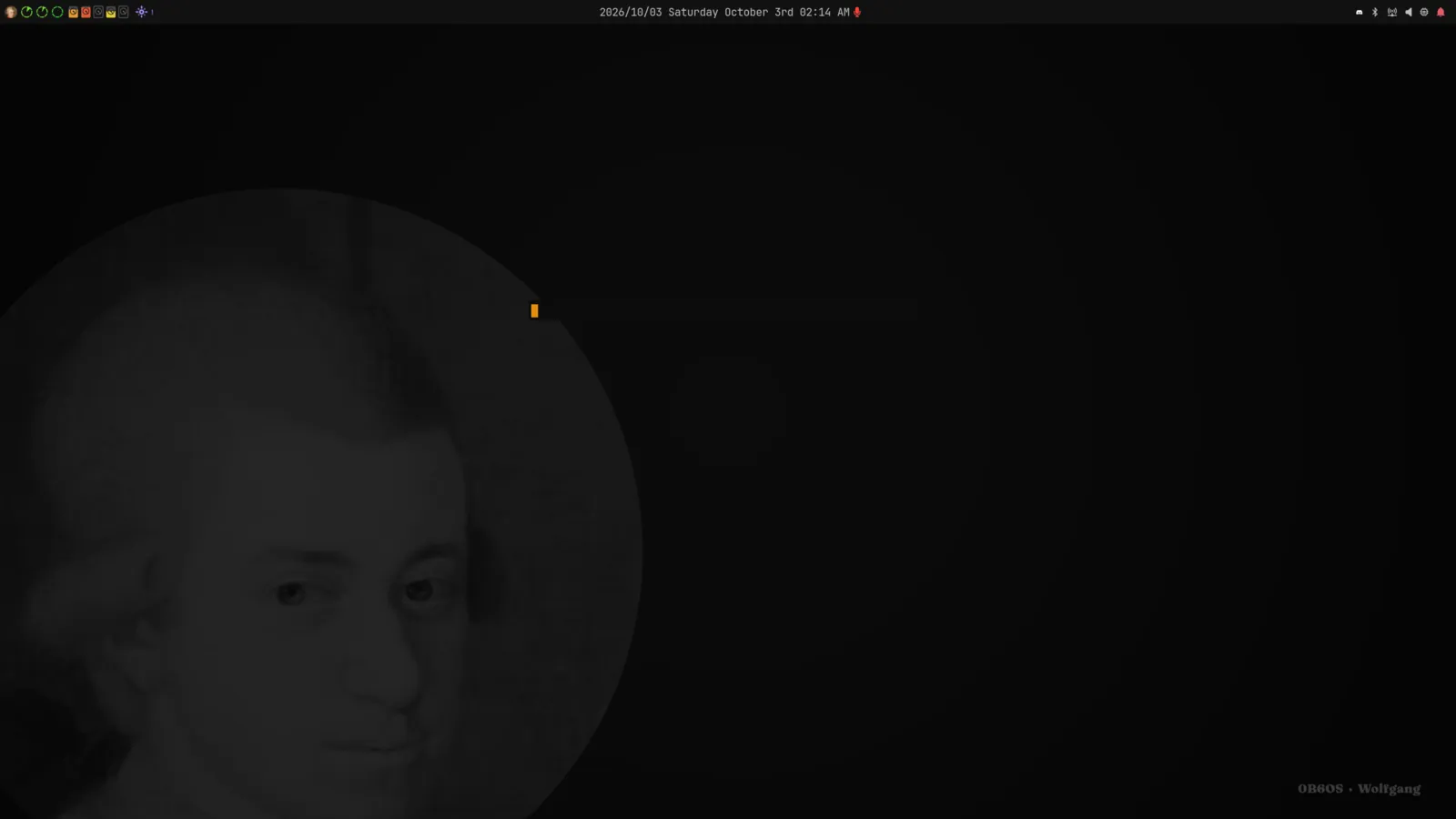
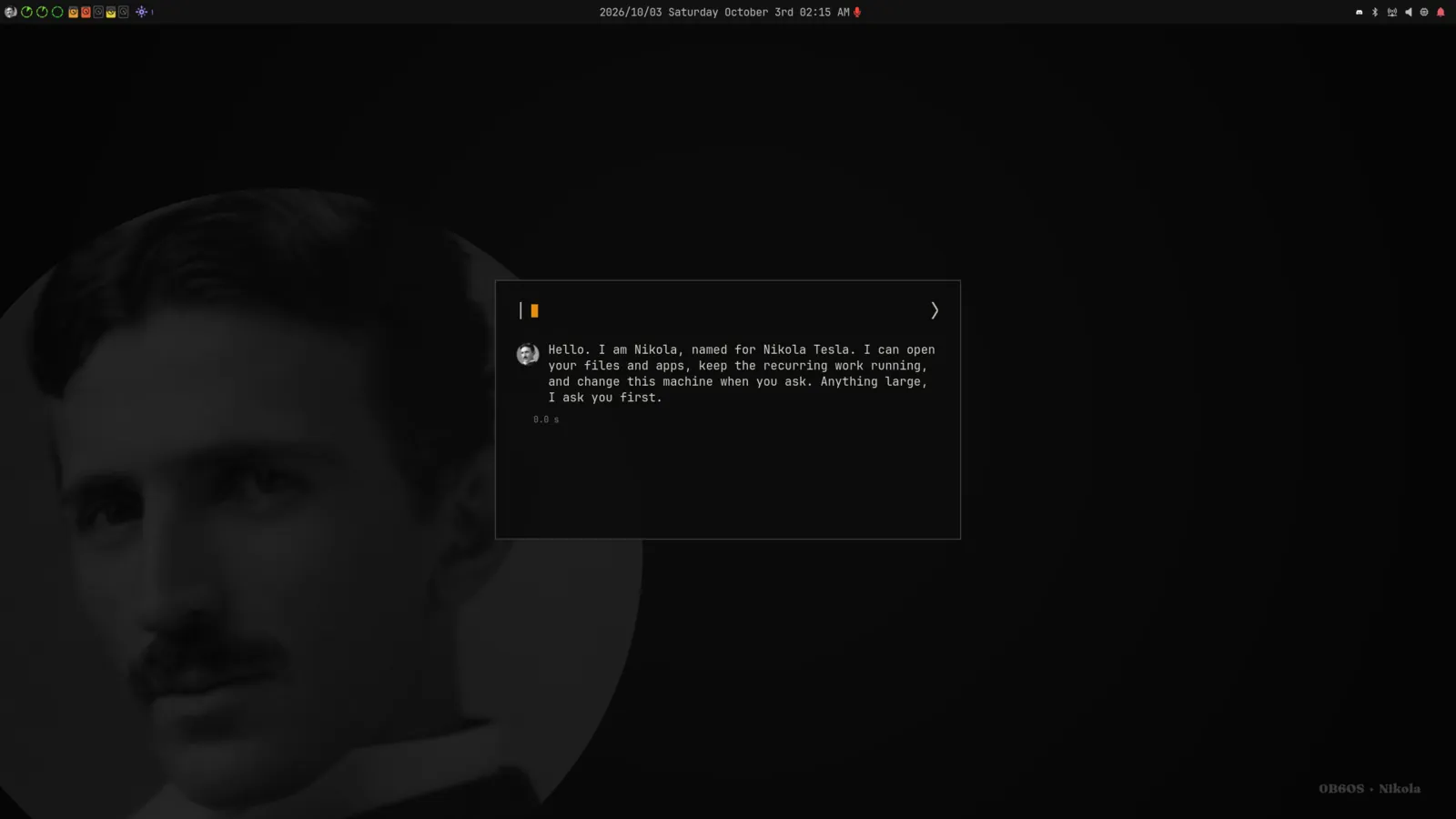
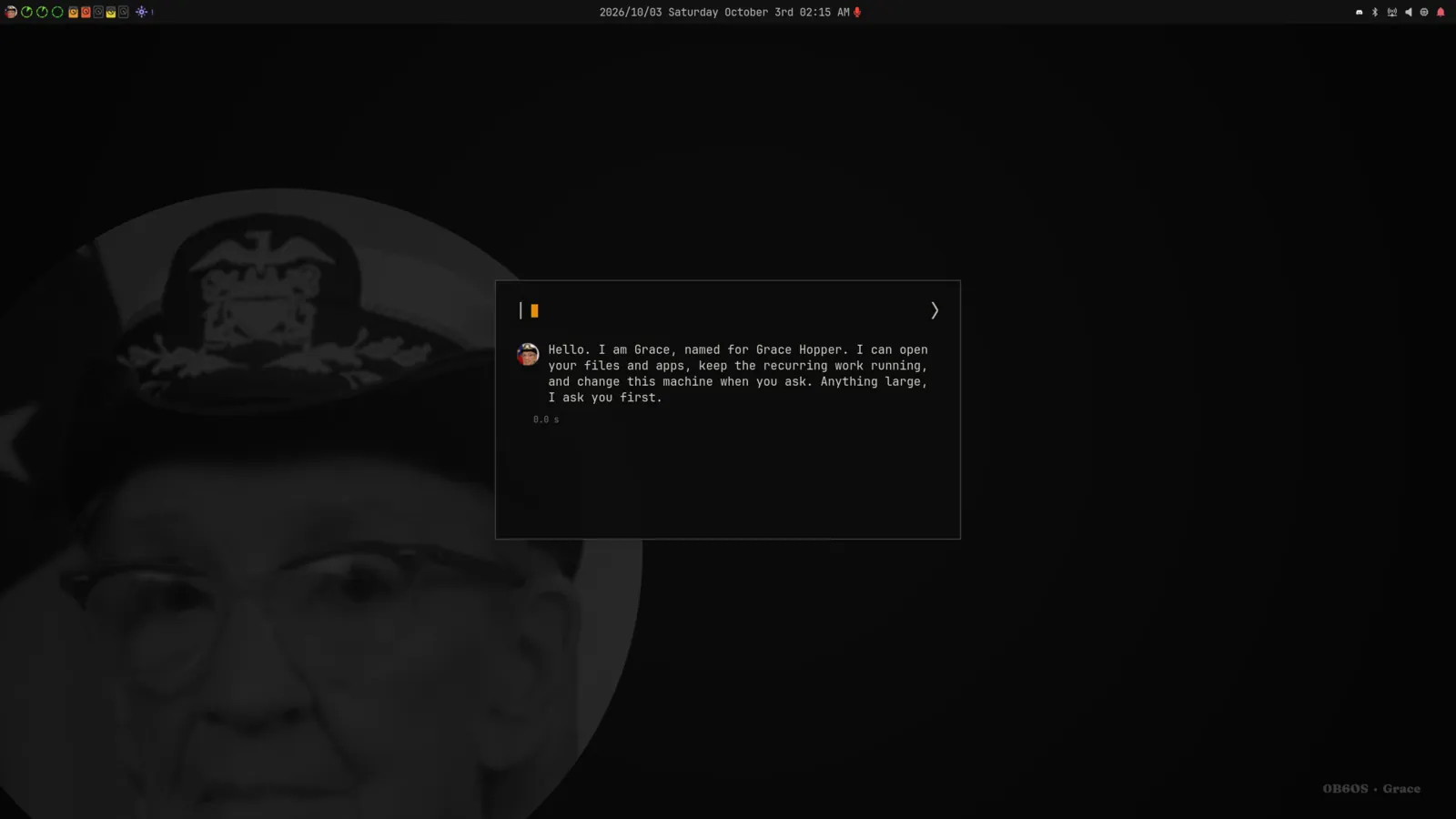
From the moment the power comes on
The name is not only on the desktop. The first thing you see is the drive asking to be unlocked, and it asks as the agent. Then you sign in, and the agent is already awake — it ran the night's work with nobody logged in, because it belongs to the machine, not to a login. It tells you what happened, not what it read.
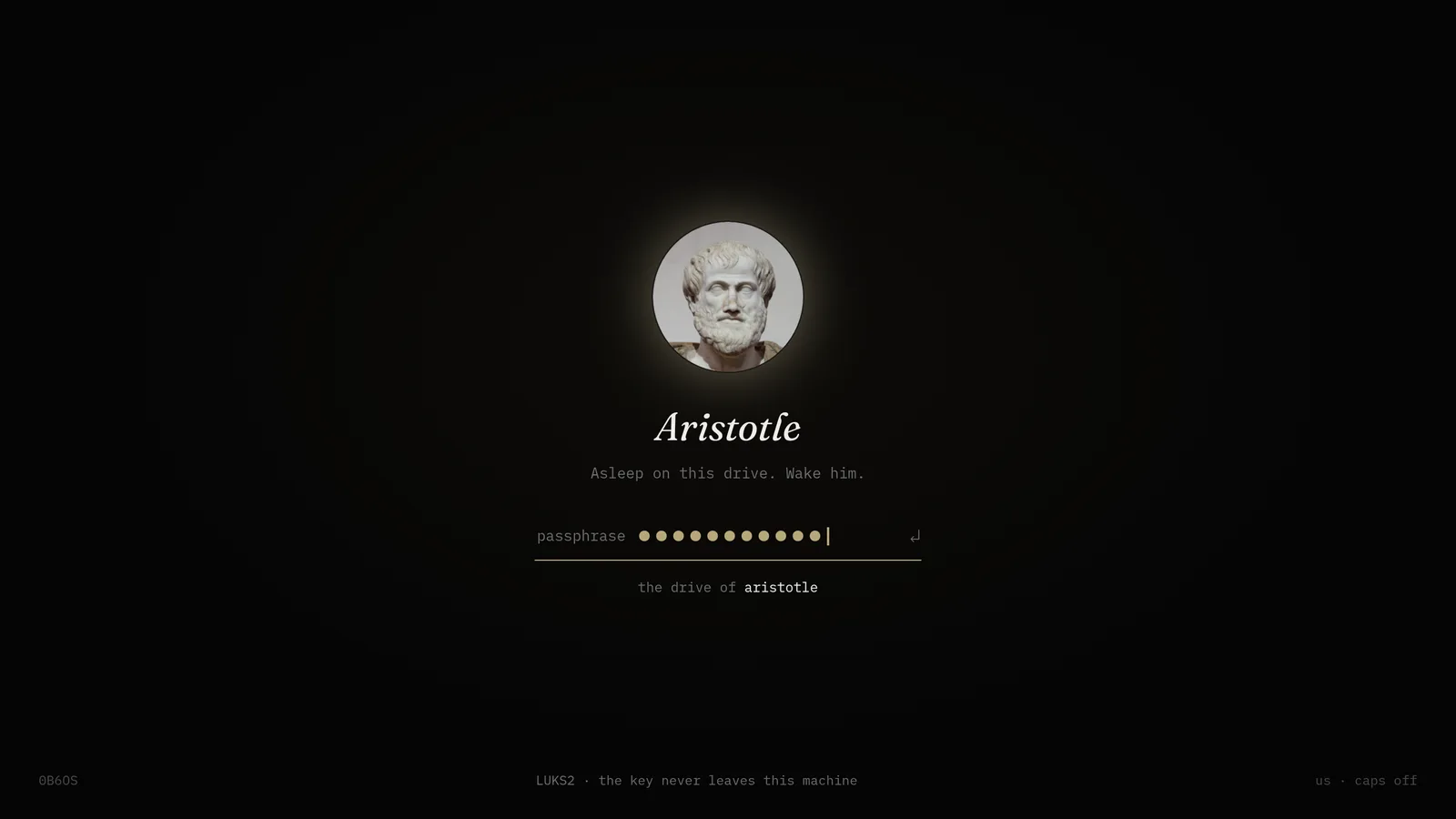
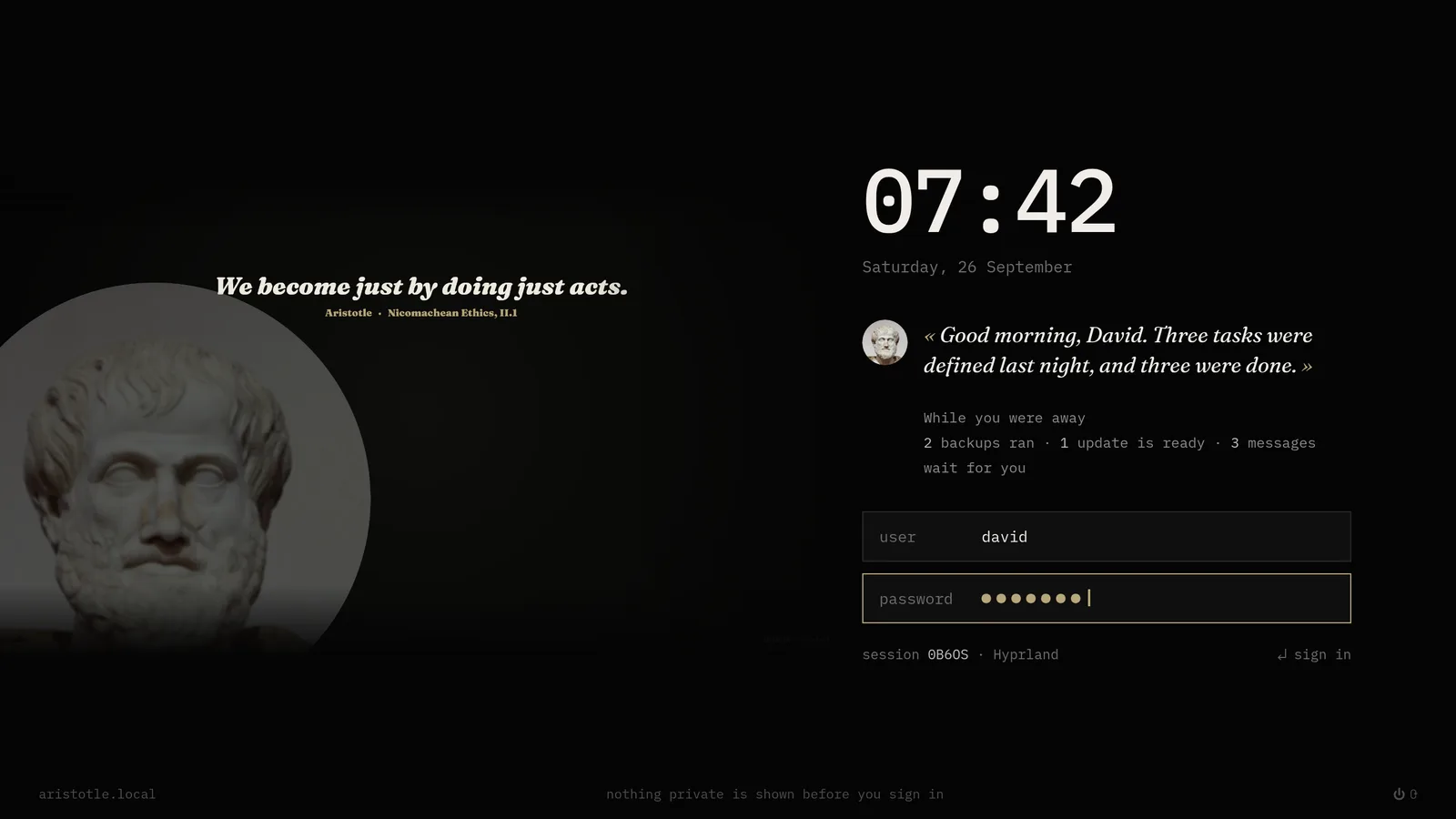
Mockups, not screenshots. Today the drive prompt is the stock one and the sign-in is tuigreet on the console. The unlock screen comes last on purpose: it sits in front of the disk encryption, where a broken theme means a machine that will not start.
The apps that exist
Written against one test: does the resident agent change what this app is? A file manager that finds things by what they are passes. A PDF reader does not, so we ship somebody else’s and spend the time elsewhere. These four run today.
Ket
the palette
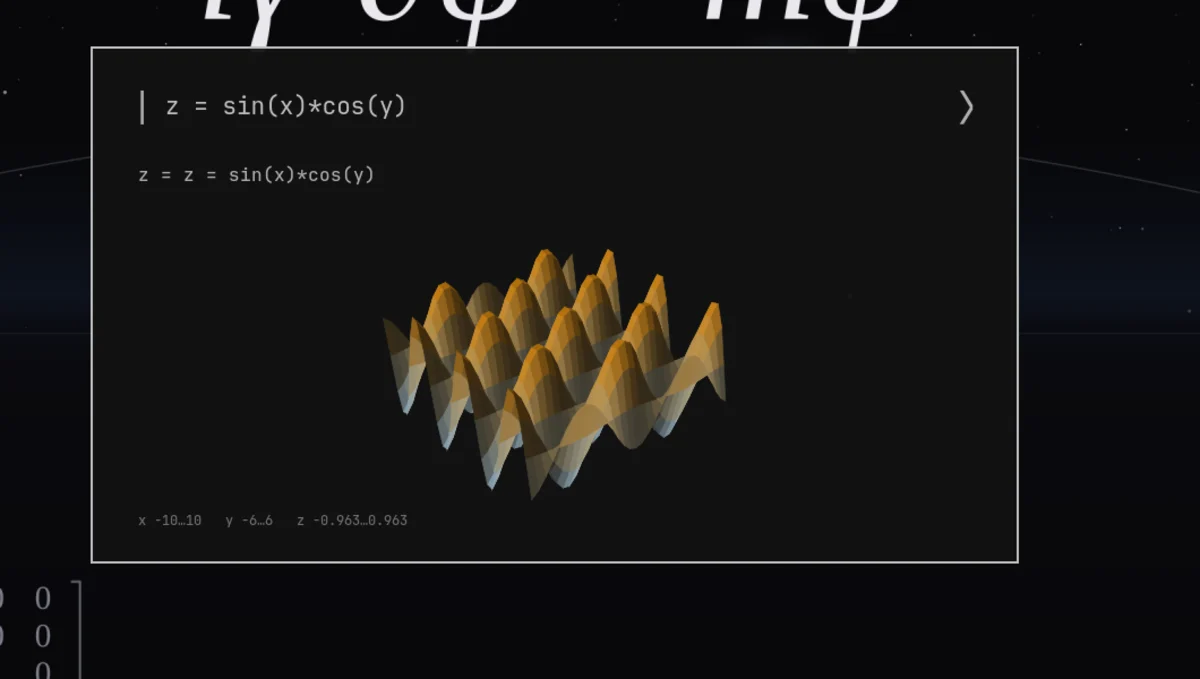
One field that takes an app, a file, a calculation or a sentence for the agent, and works out which you meant. Type a surface into it and it draws one, without leaving the palette.
Calculator
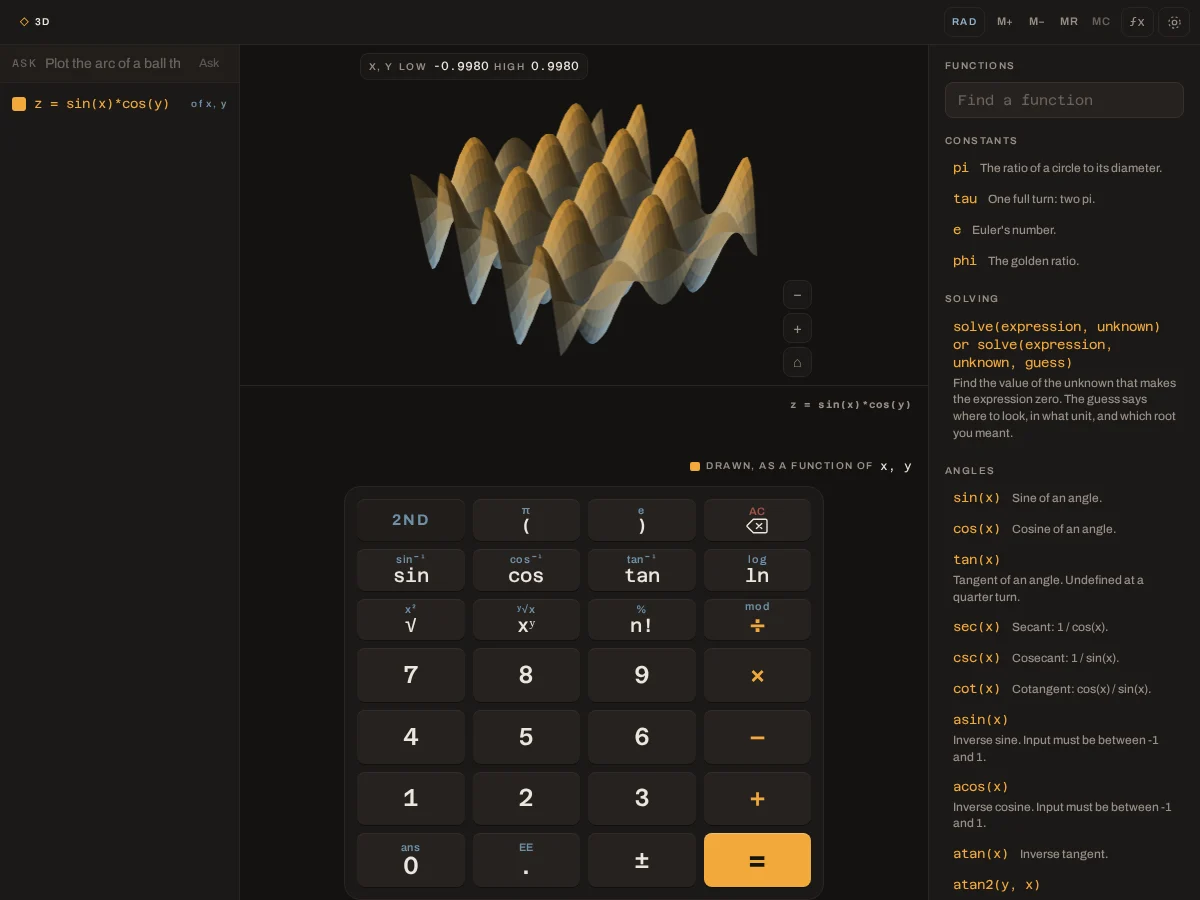
ask it, or key it
And pressing Return in the palette opens it here — the same surface, the same window, the same camera. A preview you were already looking at, not a fresh plot of the same words.
Folio
files
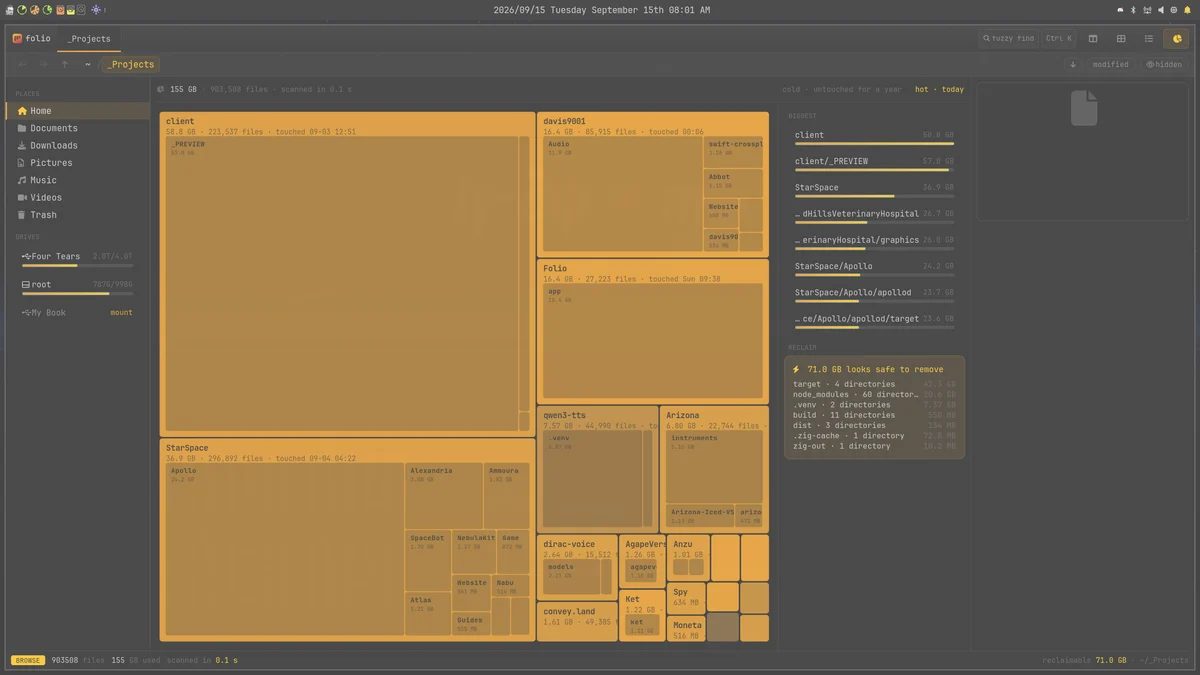
Finds things by what they are rather than what they were named. This is its space view — 903,588 files read in a tenth of a second, and 71 GB it reckons is safe to remove.
Abbot
what the machine is doing
The machine drawn as itself — sockets, memory, thermals and fans in their real places. The column no other monitor has is what the agent spent.
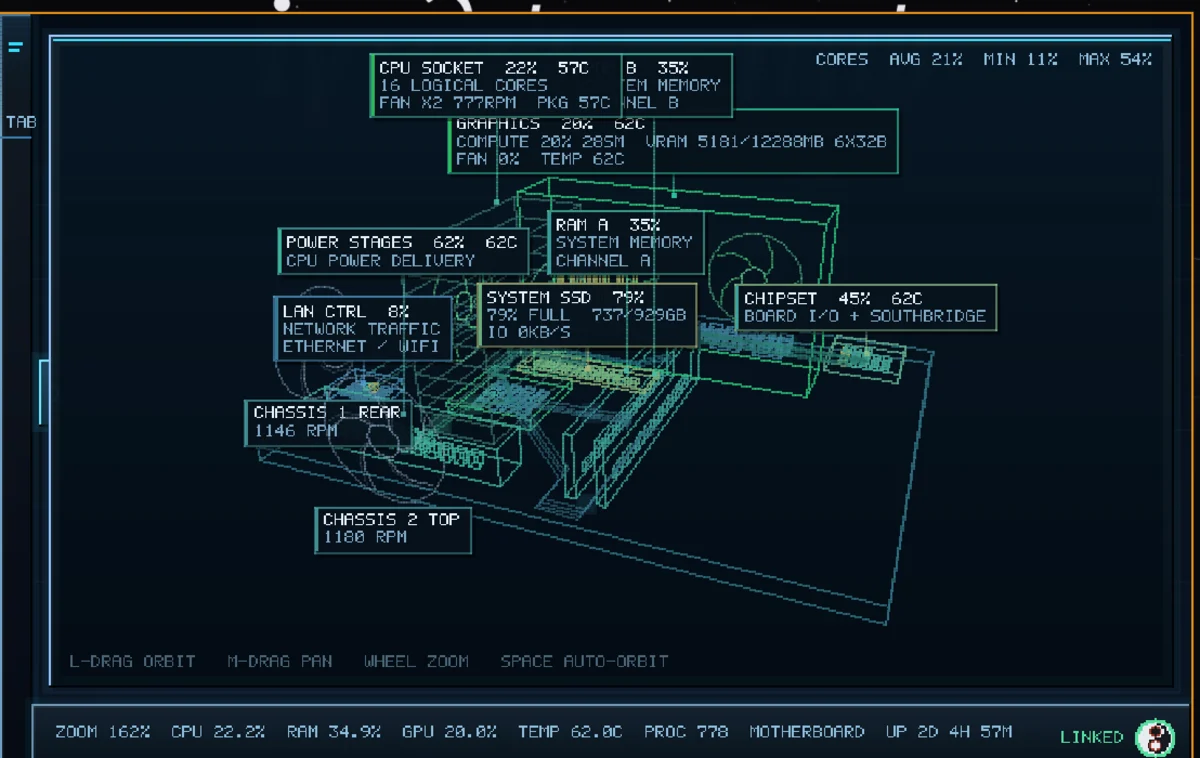
Screenshots of the real thing, not mockups. The rest of the set — calendar, clock, disks, settings, notes, comms — is written down and not yet written.
What it is
- The whole machine is yours to change
- Not the settings a vendor chose to expose — the operating system itself, and any app in it. The agent can rewrite the desktop, the defaults, an app’s behaviour, the way a thing looks, because none of it is sealed. You say what you want; it is the one doing the editing, and you are the one deciding.
- Nothing it does is one-way
- A NixOS base writes down what the machine is, so every change the agent makes is a diff you can read and a generation you can roll back to. Not the whole of why this is safe — the gate further down is a different answer to a different question — but being able to undo anything is where trust starts.
- Applications, not a chat panel
- A suite of default apps written against one test: does the resident agent change what this app is? A file manager that finds things by what they are rather than what they were called passes. A PDF reader does not, so we ship somebody else’s and spend the time elsewhere.
- Bring your own provider
- An endpoint and a key, or local hardware if the machine has enough of it. No subscription to us, and no single vendor baked into the defaults.
- The safety layer has no model in it
- A deterministic gate runs before every tool call. It cannot be argued with, which is the point — what it defends against is an agent being talked into something.
One email, when there is something to run
No newsletter, no tracking pixels, no passing it on.